One Month, Zero Hole Cards: My Experiment Playing Tiến Lên Instead of Texas Hold'em
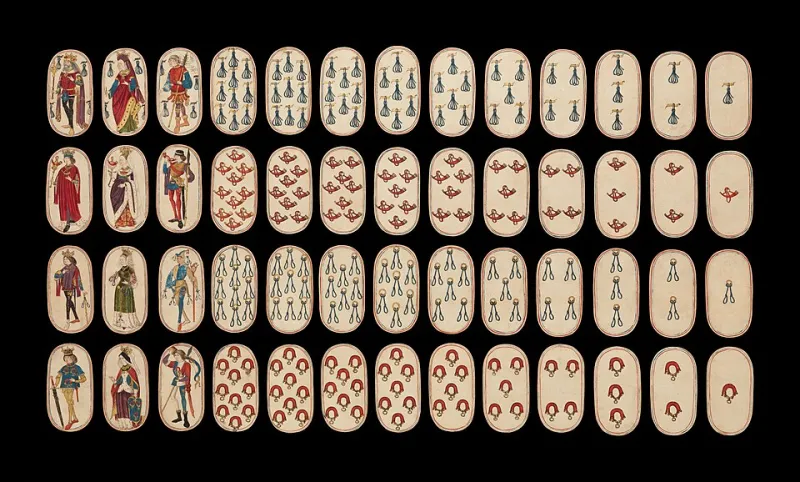
Photo: Unknown, CC0, via Wikimedia Commons
Six years of online poker rewires your brain in specific ways. You count outs without realizing it. You instinctively check the pot odds on a hamburger special. You say 'runner-runner' in normal conversation and nobody corrects you anymore.
So when I decided to spend a full month playing nothing but Vietnamese card games — Tiến Lên and Xì Dách, mostly — I assumed I'd coast through on general card sense. Reader, I did not coast.
The First Week: Nothing to Blame but Myself
Here's the thing nobody tells you about Tiến Lên: there's no bluffing your way out of a bad spot. In Texas Hold'em, a poorly timed raise can still win the pot. In Tiến Lên, the cards you're dealt are basically your destiny, and the game is about squeezing maximum value out of them.
My first few sessions were humbling. I kept waiting for betting rounds that don't exist. I'd get a middling hand and think, okay, I can play this situation — except there is no situation. There's just the sequence of plays, the escalating pressure of players passing, and the slow realization that the two of hearts in my hand is a life sentence.
The skill, I eventually learned, isn't in reading opponents. It's in sequencing. Knowing when to dump your low singles, when to chain together pairs, when to burn your bomb early versus holding it like a poker player holds pocket aces. It's chess-flavored, not poker-flavored.
Xì Dách: The Blackjack Cousin With a Personality
Xì Dách felt more familiar — it's structurally related to blackjack — but the house rules and dealer dynamics vary enough that my autopilot got me into trouble. The flexibility around drawing and the five-card tricks reward a more aggressive posture than basic blackjack strategy ever taught me.
The rhythm is faster, too. No dealer announcements, no table minimums slowing the pace. You make a decision, the next player makes theirs, and the round resolves. It reminded me of playing blackjack at a friend's kitchen table, not a casino floor.
What I Missed From Poker (and What I Didn't)
Honest inventory after 30 days:
Missed: The psychological warfare. There's a specific thrill in a well-timed bluff that Tiến Lên simply doesn't offer. I also missed fold equity — the ability to exit a bad situation at low cost.
Didn't miss: The grinding math. Tiến Lên sessions feel lighter. No bankroll anxiety per hand, no agonizing over whether to three-bet from the cutoff. The social vibe at live-dealer tables is chattier and less try-hard than poker rooms, where everyone's silently judging your bet-sizing.
The Learning Curve Is the Product
Somewhere around week three, I stopped comparing everything to poker and started enjoying the games on their own terms. That's when the month stopped being an experiment and started being fun. The learning curve isn't an obstacle — it's the whole appeal. American players raised on Hold'em and blackjack will find that these games scratch a different itch: less psychological combat, more tactical puzzle.
If you're curious about making the jump, a few practical notes:
- Start with play-money tables. Every platform I tried offers them, and Tiến Lên's hand rankings take a dozen games to internalize.
- Look for platforms with Vietnamese-language tables and native game variants rather than Westernized clones. The real rules matter.
- Prioritize sites with fast, verifiable withdrawals before you deposit — same advice I'd give for any real-money card game.
Verdict: Keep Both Decks
I'm back at the poker tables part-time now, but Tiến Lên has earned a permanent slot in my rotation. Poker is a fight; Tiến Lên is a puzzle. Some nights you want one, some nights the other.
The best part of the experiment? Discovering that 'learning a new card game' still delivers the same rush it did when I was ten. Turns out that's the real jackpot, and no wagering requirement applies.