Three Piles, No Board: What Mậu Binh Does to a Texas Hold'em Brain
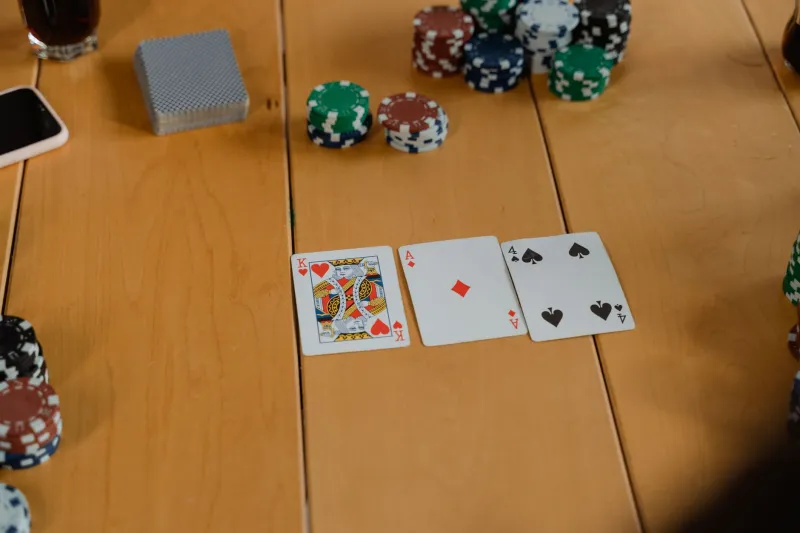
I spent years playing Texas Hold'em, and I thought I knew how to read a hand. Then I sat down with Mậu Binh, the Vietnamese card game often called Vietnamese Chinese poker, and realized I had been reading the wrong thing. In Hold'em, most of the story is on the board. In Mậu Binh, there is no board. There is only your 13 cards, the three piles you build, and the uncomfortable question of how much strength to put in each one.
That is the appeal. It is also the reason Mậu Binh can break a Hold'em player's habits in a good way.
The Quick Rules, Without the Manual
Each player gets 13 cards. You arrange them into three hands: a front hand of 3 cards, a middle hand of 5, and a back hand of 5. The back hand must be at least as strong as the middle, and the middle must be at least as strong as the front. If you break that order, you have a foul — called binh lủng in Vietnamese — and fouls are expensive.
Then hands are compared against the other players. You are not building one best hand. You are building three related hands and betting that your split is better than everyone else's split. No flop. No turn. No river. No community cards to blame.
What Hold'em Teaches You That Mậu Binh Punishes
Hold'em trains you to read board texture. Is the flop wet or dry? Does the turn card help a draw or pair the board? What range does your opponent have after a check-raise? Those are real skills, and Mậu Binh does not care about most of them.
In Mậu Binh, the first read is internal. You look at 13 cards and ask: where is my strength concentrated? Do I have a monster back hand and a weak front, or do I spread the strength to avoid a foul? That is a risk-allocation problem, not a board-reading problem. A Hold'em player's instinct is to build one strong hand and maximize it. Mậu Binh punishes that instinct because one strong pile can leave the other two exposed.
The second habit Mậu Binh punishes is waiting. In Hold'em, you can fold preflop and wait for a better spot. In Mậu Binh, you must arrange all 13 cards. There is no folding your way out of a bad deal. You can only choose the least bad split and accept that some hands are damage-control hands.
What Actually Improves
After a few sessions, I noticed two things getting sharper. The first was hand comparison speed. In Hold'em, you compare your hand to the board and to one opponent. In Mậu Binh, you compare three hands against three hands, often across multiple players. You get faster at ranking 5-card and 3-card hands without second-guessing.
The second was risk splitting. Hold'em players talk about bet sizing, but Mậu Binh forces a different kind of sizing: how much of your total strength goes into each pile. Put too much in the back and the front may lose. Spread too thin and every pile becomes mediocre. That trade-off is a useful mental muscle for any card player, even if you never play Mậu Binh for serious money.
The First Three Sessions
My advice for a Hold'em regular trying Mậu Binh in 2026 is simple: start free, count your fouls, and do not chase big pots in your first week. The first session is about learning the ordering rule. The second is about recognizing common splits. The third is about noticing when you are over-strengthening one pile because it feels good.
Use a free table or a play-money lobby first. The goal is not to win. The goal is to stop making illegal arrangements. Once you can build three legal hands without thinking, you can start thinking about relative strength. That is when the game opens up.
Why It Belongs in US-Facing Rooms
Mậu Binh is not a niche curiosity anymore. US-facing online card rooms have been adding Vietnamese card games because players want something that feels less solved than Hold'em. The rules are easy to learn and hard to master, which is exactly the combination that keeps a lobby alive. For Hold'em players, it is a useful side quest: it strips away the board, forces you to read your own cards more honestly, and makes you accept that some hands are about losing less, not winning more.
At GameNoHu Uy Tín, we do not pretend Mậu Binh will replace Texas Hold'em for most American players. But if you want a game that resets your hand-reading habits and makes you think in three piles instead of one, it deserves a serious look. Bring your Hold'em brain. Just be ready to unlearn a few things.